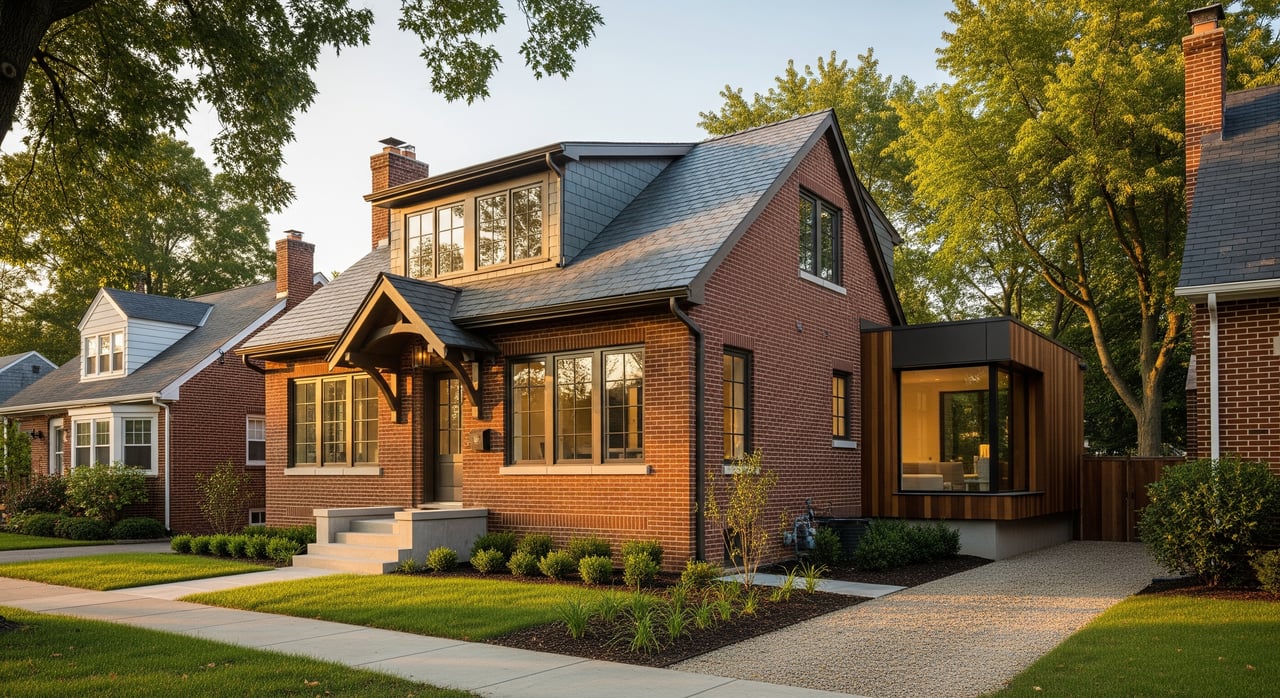
Eyeing a Norwood fixer and wondering how to pay for the upgrades without juggling two loans? You are not alone. With many Norwood homes older and full of potential, pairing your purchase with renovation financing can be a smart move. In this guide, you will learn how FHA 203(k) and Fannie Mae HomeStyle Renovation loans work, where they differ, and which might fit your budget, timeline, and goals in Norwood. Let’s dive in.
Renovation loans at a glance
Both FHA 203(k) and Fannie Mae HomeStyle roll your purchase and renovation costs into one mortgage based on the home’s as-completed value. That single loan structure keeps your cash flow simpler during repairs and can reduce total closing costs compared to separate financing. You will work from contractor bids and plans so the appraiser can value the finished home.
FHA 203(k) is an FHA-insured loan with Limited and Standard options that fund cosmetic to major work and often involve a HUD consultant for larger projects. You can review the program overview on HUD’s site and the Limited versus Standard details on HUD’s 203(k) page (HUD 203(k) overview, HUD 203(k) details). HomeStyle is a conventional loan with flexible project types and occupancy options, outlined on Fannie Mae’s consumer page (HomeStyle basics).
In Hamilton County, the 2025 FHA one-unit limit is 524,225, and the 2025 baseline conforming limit is 806,500. Norwood’s typical prices sit well below these ceilings, which puts both programs in reach for many local homes (FHA limits, Hamilton County, FHFA 2025 conforming limit).
203(k) vs. HomeStyle: key differences
Eligibility and occupancy
- FHA 203(k): You must live in the home as your primary residence. Eligible properties include 1 to 4 units, certain condos for interior work, some manufactured homes, and many mixed-use properties that are primarily residential (HUD 203(k) overview).
- HomeStyle: You can use it for a primary home with 1 to 4 units, a one-unit second home, or a one-unit investment property, subject to conventional rules and lender approval (HomeStyle eligibility).
Types of projects
- 203(k) Limited: Non-structural work with a cap up to 75,000. 203(k) Standard supports structural and major projects with a minimum 5,000 in rehab and typically requires a HUD-approved consultant (HUD 203(k) details).
- HomeStyle: Broad flexibility, including many structural items, additions, accessory dwelling units, and pools, subject to local approvals and some exclusions. Fannie Mae’s Selling Guide outlines permitted improvements (HomeStyle permitted work).
How much you can borrow
- FHA 203(k): Your total loan must fit the FHA county limit once the after-improved value is set. For Hamilton County one-unit homes, that limit is 524,225 for 2025 (FHA limits, Hamilton County).
- HomeStyle: For purchases, loans can go up to 75 percent of the lesser of purchase price plus renovation costs or the as-completed value. Maximums can reach conforming limits, which are 806,500 in 2025 for most counties (HomeStyle basics, FHFA 2025 conforming limit).
Down payment, credit, and mortgage insurance
- FHA 203(k): As little as 3.5 percent down with qualifying credit, plus upfront and annual FHA mortgage insurance premiums. FHA credit guidelines are generally more flexible than conventional rules (FHA loan basics).
- HomeStyle: Conventional underwriting applies. Private mortgage insurance is required above certain LTVs and is typically cancelable once you reach 80 percent loan-to-value. Many lenders expect higher credit scores for conventional loans compared to FHA (HomeStyle basics).
Appraisal, draws, and timing
- Both programs rely on an as-completed appraisal based on your plans and specs. That value sets your maximum financing and loan-to-value (HomeStyle collateral and appraisal).
- Funds are held for draws and released as work is inspected. Standard 203(k) commonly requires a HUD consultant to oversee draws and certify work; HomeStyle uses completion verification by an appraiser or approved inspector (HUD 203(k) details).
- HomeStyle usually requires completion within roughly 12 to 15 months, depending on lender guidelines (HomeStyle basics).
Which fits common Norwood scenarios
When 203(k) fits
- You will live in the home and want a low down payment.
- The project is cosmetic to major, and the total loan will stay under the FHA county limit.
- You are comfortable working with a HUD consultant for larger or structural work (HUD 203(k) details).
When HomeStyle fits
- You want to finance larger or higher-end upgrades, like additions or an accessory dwelling unit, subject to local approvals.
- You plan to buy a second home or a one-unit investment property in Norwood.
- You have stronger credit, want conventional PMI that can be canceled, and prefer flexible project types (HomeStyle permitted work).
Note a key constraint: if your purchase price plus renovations would exceed the FHA county limit, 203(k) will not work. In that case, HomeStyle or another conventional option may be a better fit, subject to conforming limits and underwriting (FHA limits, Hamilton County).
Step-by-step: from offer to keys
- Get pre-approved: Share income, assets, and credit documents. Your lender will confirm whether FHA 203(k) or conventional HomeStyle fits best for your goals (FHA loan basics).
- Build your scope: Obtain detailed contractor bids and plans. For 203(k) Standard, a HUD consultant prepares a work write-up. Expect a contingency reserve in your budget (HUD 203(k) details).
- Appraisal and underwriting: The appraiser values the home after improvements. Underwriting checks LTV, loan limits, occupancy, credit, and reserves (HomeStyle collateral and appraisal).
- Close and renovate: Funds are escrowed for draws. Inspections drive each draw until final completion and sign-off (HUD 203(k) details).
Quick checklist for your fixer
- Confirm your occupancy plan. Investors cannot use 203(k) (HUD 203(k) overview).
- Compare total project cost to as-completed value. Both programs are capped by LTV rules tied to that value (HomeStyle collateral and appraisal).
- Verify Hamilton County loan limits and ensure your loan fits if you use 203(k) (FHA limits, Hamilton County).
- Match financing to your profile. 203(k) can work with lower down payments and flexible credit. HomeStyle fits stronger credit and broader project types (FHA loan basics, HomeStyle basics).
- Choose experienced partners. Lenders and contractors who know renovation loans help keep draws and inspections on track (HUD 203(k) details).
Local tips for Norwood buyers
- Permits and inspections: Plan for Hamilton County permitting and code compliance. Both programs require licensed contractors and proof of permits.
- Contractor readiness: If you pursue a Standard 203(k), make sure your contractor is comfortable with HUD consultant inspections and staged draws.
- Timeline with sellers: Renovation loans add time for bids and appraisals. If a seller needs a quick close, negotiate timelines early and build a realistic schedule.
The bottom line
If you will live in the home and want a low down payment, FHA 203(k) can be a practical path for Norwood fixers. If you need broader project options, higher renovation budgets, or investor flexibility, HomeStyle is often the better fit. Either way, aligning the scope, budget, and as-completed value is the key to a smooth approval.
Have questions about which route matches your Norwood plans? Reach out to Angel apking for neighborhood guidance and a financing game plan that fits your project.
FAQs
Can I use FHA 203(k) for a two-family in Norwood?
- Yes. FHA 203(k) allows 2 to 4 unit properties when you will occupy one unit, subject to FHA county loan limits and standard underwriting (HUD 203(k) overview).
Which loan covers an ADU or a pool in Norwood?
- HomeStyle generally permits ADUs, pools, and many exterior additions, subject to local approvals, while 203(k) has stricter rules and oversight for large projects (HomeStyle permitted work).
How large can my renovation be with each program?
- 203(k) Limited caps non-structural work up to 75,000 and the Standard option has a 5,000 minimum with no strict dollar cap beyond FHA county limits; HomeStyle can fund projects up to its percentage limits, typically 75 percent of defined values, if the as-completed appraisal supports it (HUD 203(k) details, HomeStyle basics).
What are the minimum down payment and credit needs?
- FHA 203(k) can allow 3.5 percent down with sufficient credit and requires FHA mortgage insurance. HomeStyle follows conventional standards, often with higher credit expectations and PMI that can usually be canceled at 80 percent LTV (FHA loan basics, HomeStyle basics).