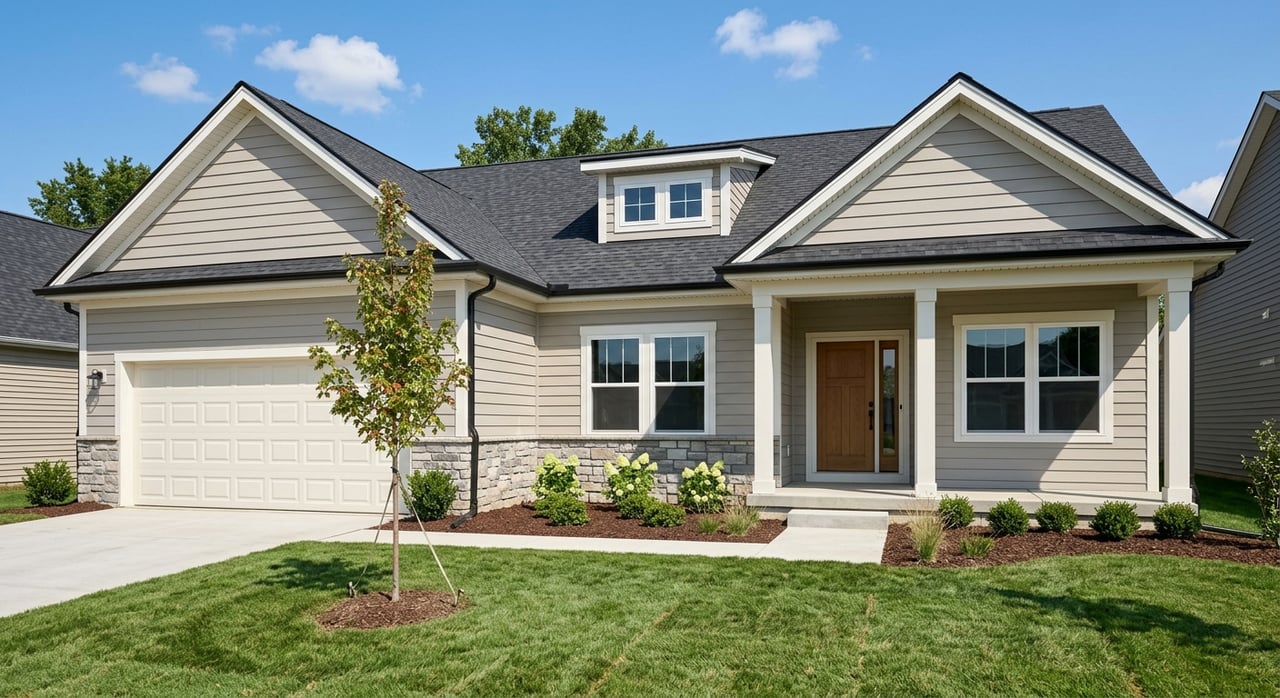
Thinking about buying new construction in Deerfield Township? You are not alone. This part of Warren County offers a wide mix of new-home options, from low-maintenance townhomes to custom enclaves, but the process can feel more complex than buying a resale home. If you want to understand what to expect with location, timelines, contracts, upgrades, and monthly costs, this guide will help you move forward with more confidence. Let’s dive in.
Why Deerfield Township Stands Out
Deerfield Township is one of Warren County’s major growth areas. Township materials note more than 40,000 residents, over 1,000 companies, more than 23,000 employees, direct access to I-71, a strong retail base, and no local income tax. For many buyers, that combination supports both convenience and long-term appeal.
Just as important, new construction here is not limited to one type of neighborhood. You will find mixed-use communities, low-maintenance townhomes and paired villas, single-family developments, and smaller custom or limited-lot opportunities. That variety gives you more ways to match your budget, lifestyle, and move-in timeline.
New Construction Types in Deerfield Township
Mixed-use communities
Some of the area’s newer projects reflect a more connected, walkable style of development. Township project materials describe The District at Deerfield as a mixed-use development with retail, restaurants, apartments, and a public square. Mosaic is also described as a mixed-use community with greenspace, restaurants, shops, courtyard homes, and townhomes.
If you want a neighborhood feel that includes nearby dining, retail, and shared outdoor spaces, this type of community may be worth a closer look. It can offer a different experience than a traditional subdivision built around only single-family homes.
Low-maintenance homes and townhomes
Deerfield-area buyers can also find low-maintenance options that may reduce exterior upkeep. Local examples in the research include communities with townhomes, paired villas, and single-family homes in settings marketed for easier maintenance.
This option can appeal to busy professionals, relocating buyers, and downsizers who want newer finishes without taking on as much ongoing yard or exterior work. It can also be a practical fit if you want a newer home with a simpler day-to-day routine.
Limited-lot and custom opportunities
At the higher end, there are also smaller and more exclusive new-construction options. The research highlights communities such as Long Cove Meadows, The Enclave at Long Cove, and custom-home opportunities in Kennington within Deerfield Township.
If you are looking for a more tailored build or a community with fewer homesites, these projects may offer a different level of privacy, design input, or lot selection. Availability may be more limited, so timing can matter.
Verify the Exact Location First
One of the most important things to know is that Deerfield-area new construction is often marketed with Mason addresses, even when the project is described as being in Deerfield Township or the Deerfield Center area. That can create confusion if you rely only on the community name or mailing address.
Before you move forward, verify the exact parcel, jurisdiction, and community details. This matters for taxes, local oversight, and day-to-day expectations about where the home is actually located.
Check school assignment carefully
Township materials say most of Deerfield Township is served by Kings Local School District or Mason City School District. They also note that school assignment should be verified parcel by parcel rather than assumed from a mailing address.
For buyers, that means it is smart to confirm the assigned district early in the process. In a fast-moving new-construction search, that one detail can shape which communities stay on your shortlist.
How the Local Permit Process Works
In Deerfield Township, new construction typically starts with township zoning and then moves to county permitting and inspections. The township says new construction needs a zoning certificate, applications must include site plans and drawings, electronic submissions are not accepted, and zoning certificates are usually issued in 3 to 5 business days and remain valid for 12 months.
Warren County says permits are required for all new 1-, 2-, and 3-family structures. The county also notes that residential plan review takes about two weeks, with inspections that may include footer, slab, crawl, rough building, rough electric, insulation, and final inspections.
There is also an important timing rule at the county level. Warren County states that you cannot pour concrete until the permit has been issued and a footer inspection has been completed. Inspection requests also require 24 hours’ notice, and approved plans must be on site.
How Long a New Build Usually Takes
A new build usually takes longer than a resale purchase because there are more stages. You are not only waiting for financing and closing. You are also waiting on permits, construction milestones, inspections, and a final orientation or walk-through.
Builder timelines in the research show a reasonable local range. M/I Homes says construction typically takes 4 to 6 months after the building permit is received, while Traditions Group says its process often runs about eight months from construction to closing.
That does not mean every home will fit neatly into those windows. County review order, inspection scheduling, weather, selections, and builder workload can all affect the timeline. If you need to move by a specific date, it helps to ask not just for a target completion date, but also what factors could shift it.
Quick move-in homes can save time
If timing is your top priority, quick move-in homes may be worth considering. The research notes that builders such as M/I Homes and Ryan Homes describe quick move-in homes as a way to get into a new home faster.
The tradeoff is usually less customization. In many cases, major design choices have already been made, so you may gain speed but give up some control over finishes and features.
What to Expect in the Contract Stage
With new construction, the contract deserves close attention. Ohio’s homebuyers guide says that once an offer is accepted, it becomes a binding contract, and it recommends attorney review. The contract should clearly spell out price, included items, financing, earnest money, closing, possession, and inspection provisions.
That matters because many key terms are set before construction is complete. Local builder materials in the research show a common pattern of purchase agreement first, then design selections, then construction, then closing.
Ask clear questions about deposits
The builder deposit is another item to review carefully. The research notes that builders may ask for an upfront deposit, and buyers should ask when that deposit can be returned.
If you are comparing communities, ask the same deposit questions at each one. You want to understand the amount due, the payment schedule, and what happens if financing, timing, or other parts of the deal change.
You can use your own lender
Many buyers assume they must use the builder’s affiliated lender, but that is not the case. The research states that buyers do not have to use the builder’s affiliated lender and should shop around.
That gives you room to compare rates, fees, and loan options. Even if a builder offers incentives tied to a preferred lender, it is still wise to compare the total cost before deciding.
Design Selections and Upgrades
One of the biggest advantages of new construction is the chance to personalize the home. Builder materials in the research show that buyers often make selections through a design studio or with a selections coordinator rather than choosing upgrades in a piecemeal way.
Common upgrade categories can include cabinetry, countertops, flooring, lighting, tile, and exterior details. The exact options depend on the builder, home plan, and community.
This is where many buyers can lose track of the real budget. A base price may not reflect lot premiums, structural options, or finish upgrades, so it is important to ask what is included from the start and what will cost extra.
Why Inspections Still Matter
A new home is still a home under construction, and inspections still matter. The research recommends an independent inspection as soon as possible and notes that a satisfactory-inspection contingency can allow a buyer to cancel without penalty.
That can surprise buyers who assume a brand-new home does not need outside review. County inspections and builder quality checks serve important roles, but an independent inspection can give you another layer of information before closing.
New Construction vs. Resale in Deerfield Township
New construction can be a strong fit if you want newer systems, energy-efficient features, and a more predictable feature set. The research notes that building codes and energy efficiency can affect insurance and utility costs, and some builders highlight independent energy testing, warranties, and included features from the beginning.
Resale homes may be a better fit if you want immediate occupancy and a shorter path to closing. The tradeoff is that existing homes may bring more near-term maintenance or repair costs, and warranty coverage usually works differently.
Compare the full monthly cost
In Deerfield Township, the fairest comparison is often total monthly cost, not just purchase price. The research notes that your monthly payment can include principal, interest, property taxes, mortgage insurance, homeowners insurance, supplemental insurance, and HOA fees.
You should also compare upgrades, lot premiums, and any community dues. Since township materials also note there is no local income tax in Deerfield Township, it helps to view that detail alongside the rest of your monthly and long-term ownership costs.
A Local Detail Buyers Often Appreciate
Deerfield Township requires pedestrian walkways along the frontage of new commercial and residential developments. That public works policy helps explain why some newer communities here may feel more connected and easier to navigate on foot than older suburban developments.
It is a small detail, but it can shape how a neighborhood feels once you live there. When you tour communities, pay attention to how the street layout, sidewalks, and shared spaces support your everyday routine.
If you are weighing a new build in Deerfield Township, the right choice usually comes down to three things: how long you can wait, how much customization you want, and how you want your monthly costs to look after closing. Having a local guide can make it much easier to compare communities, verify the fine print, and choose a home that truly fits your goals. When you are ready for thoughtful, high-touch guidance on Deerfield-area new construction, connect with Angel apking.
FAQs
How long does new construction in Deerfield Township usually take?
- Local builder examples in the research range from about 4 to 6 months after permit to about 8 months from construction to closing, depending on the builder, product type, and scheduling.
Can you use your own lender for a Deerfield Township new build?
- Yes. The research states that buyers do not have to use the builder’s affiliated lender, so it is smart to shop around and compare total loan costs.
Do you still need an inspection on a new construction home in Deerfield Township?
- Yes. The research recommends an independent inspection and notes that a satisfactory-inspection contingency can protect you if issues are found.
How do school assignments work for Deerfield Township new construction?
- Township materials say most of Deerfield Township is served by Kings Local School District or Mason City School District, and assignment should be verified parcel by parcel.
What should you review in a new construction contract in Ohio?
- The research says the contract should clearly address price, included items, financing, earnest money, closing, possession, and inspection provisions, and attorney review is recommended.
What upgrades are common in Deerfield Township new construction communities?
- Common selections in the research include cabinetry, countertops, flooring, lighting, tile, and exterior details, though options vary by builder, plan, and community.